Diesel
Engine Dynamometer Testing
The AEI
facility, which includes ten engine dynamometer test cells, is
uniquely designed to provide a research and development
environment in support of a breadth of diesel engine and/or
vehicle development programs. Numerous diesel engine testing
services are offered, ranging from endurance testing to
ratings development for optimum performance and emissions
compliance.
AEI’s test
cell privacy configuration is structured for protecting
proprietary projects and providing a comfortable work environment
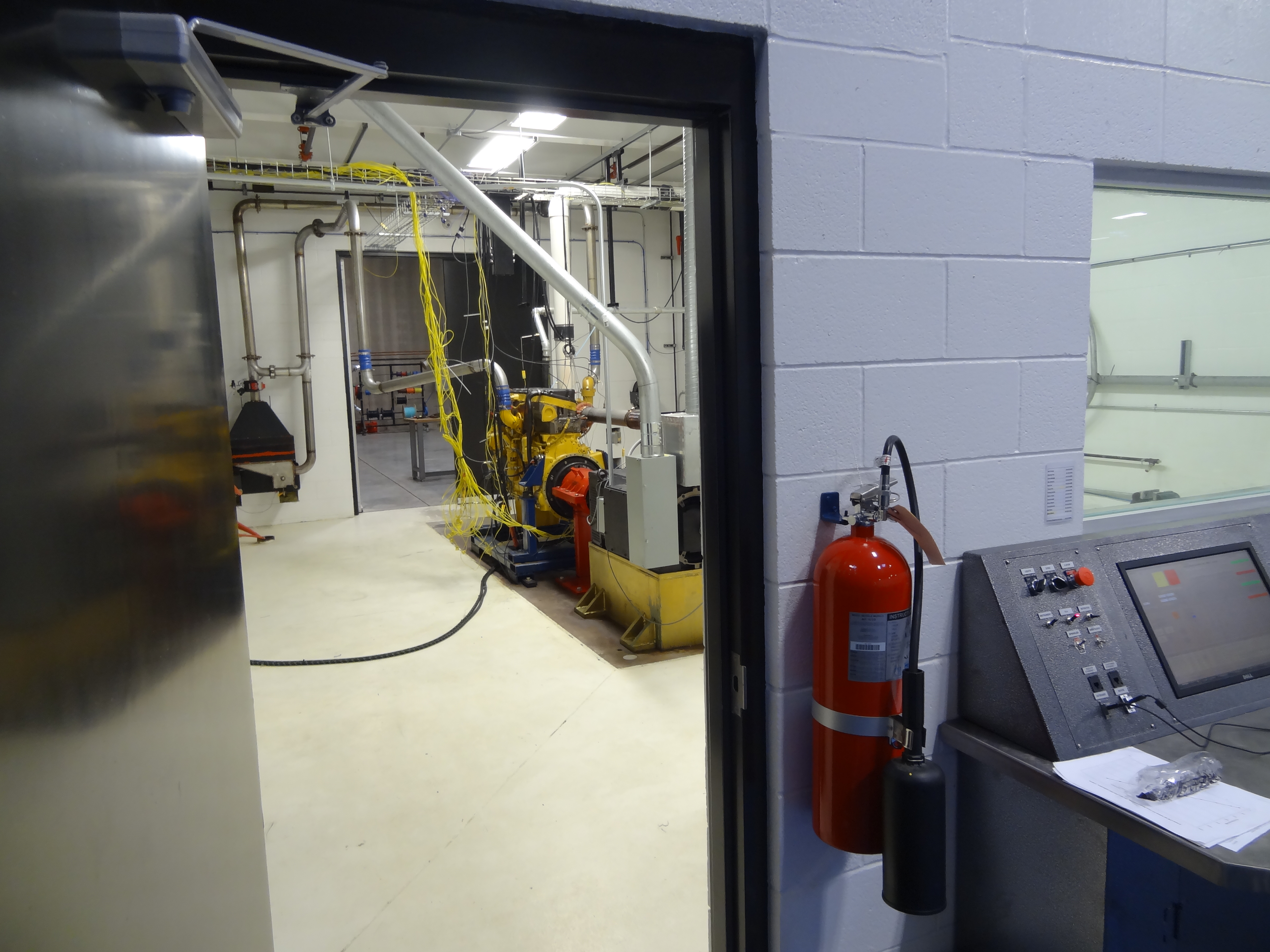
for customers and AEI support personnel. Each test cell computer
console room is isolated from the other test cells and is equipped
with an individual entry door. Privacy blinds may be closed to
prevent others from viewing the engine or other hardware. These
console rooms provide a laboratory-like environment, where
customers may view the control screens and see the engine test
cell through a window. A single door provides front entry to the
test cell from the control console area. Large double doors for
installing and removing engines are located on the opposite side
of the cell from the console area. This arrangement limits access
to visitors, and only allows authorized personnel in all areas
where engines are stored, maintained, torn down, inspected etc.
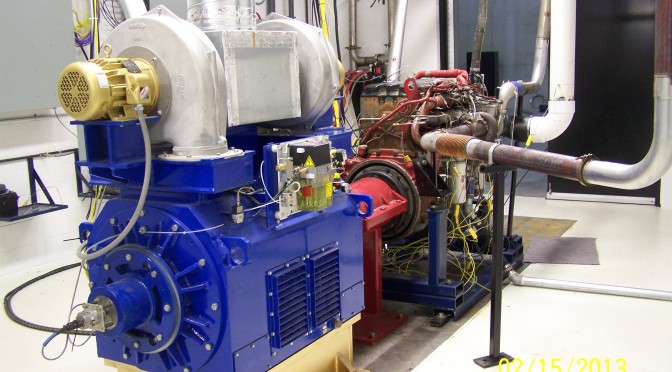
Engine Performance and Durability Test Cells
 
▪
10 test cells with 30 to 800 HP
▪
5 AC Motoring
Dynos
▪
1 DC Motoring
Dyno
▪
4 Eddy Current
Dynos (350 to 700 HP)
▪
150 HP Eddy current dyno (installed as needed for high speed, low inertia
requirements)
▪
24 hour continuous support
▪ Automated data acquisition
▪ Remote data retrieval with customer logins
▪ HEPA filtered combustion air
▪ Cyclic test scripts or steady state operation
▪ Temperature controlled intake air
▪
Variable speed intake and exhaust room ventilation fans
▪
Humidity controlled combustion air to 75 grains of water
(optional)
▪
Measurements: pressures, temps, fuel rate, heat rejection, air
flow, emissions, smoke, lubricant oil soot etc.
All
of the controls and associated electronics for test cell operation
were developed at Analytical Engineering, Inc. The facility
controls, including fans, pumps, temperature controls, cooling
towers etc., are controlled via a central computer control room.
The entire facility computer control systems tie back to this
central hub where all data are stored, backed up and maintained by
skilled personnel. The entire AEI facilities computer systems are
developed in house and utilize Linux real-time operating systems.
This, in conjunction with skilled in-house programmers assures
complete flexibility, optimum control and the ability to
incorporate practically any conceivable experimental requirement.
The
operator may access the test cell through a door next to the
console. The window is bullet resistant 1 ½ inch thick
rubber-reinforced glass and is shaded on an as-needed basis to
prevent visual access to the inside of the cell.
Offices
are located above the laboratories adjacent the cells providing
visibility of the hallway outside the cells, but are so designed
to prevent visibility of an engine in the cell. This design
provides a comfortable and ergonomic office design without
compromising the intellectual property integrity of the test cell.
In essence, the AEI facility is designed to provide visitor access
to much of the building without concern of that person viewing
anything belonging to another client. AEI management and personnel
maintain the highest degree of intellectual property protection,
both for internal projects and those of our clients.
The
test cell facility is constructed with underground plenums that
connect each test cell with the central emissions measurement
laboratory. Within this lab conventional raw gas analysis is
accomplished using NDIR, Chemiluminescent, paramagnetic and flame
ionization (FID) analyzers. In addition to these methods and
systems for analysis, AEI offers measurement capability well
beyond conventional techniques utilizing laboratory grade
instrumentation. A 0.25 cm-1 resolution FTIR based gas analysis
system provides the ability to simultaneously measure all infrared
active gases including NO, NO2, CO, CO2, N2O,
NH3, H2O, HNO3, SO, SO2,
HS and many others with excellent precision and detection limits
often to below 1 ppm. Additionally, this method can provide
hydrocarbon speciation. These capabilities are very important when
studying non-regulated emissions and when attempting to elucidate
the byproducts or intermediate chemical species for aftertreatment
Test Cell Specifications
 
The Analytical
Engineering, Inc. engine test cells are all roughly equivalent in
terms of
size and engine testing capacity. Odd numbered test cells have a
16 x 4 foot bedplate and even numbered have 14 x 4 foot bedplates.
The bedplates are 4 inch 1018 solid steel construction and are
bonded to 60,000 pound steel reinforced concrete inertia blocks.
The inertia blocks are isolated from the building through
vibration isolation foam seams. The bedplate and inertia block
combination are designed for engine / dynamometer combinations up
to approximately 3,000 horsepower. Six of the test cells provide
rear access through double doors with an opening dimension of 8
feet wide by 9 feet tall, thus accepting practically any
conventional engine size.
AEI currently maintains a variety of dynamometers in house. Six
of the test cells have been upfit with extremely high speed
motoring dyno controls within the last two years.
Test Cell Ventilation
Each test cell is ventilated with a totally separate, twin air
handler system with a bypass. With computer controlled variable
speed blowers, air velocity, test cell temperature and inside
barometric pressure (delta to outside) can be maintained and
carefully controlled. The entering air from outside is filtered
through a separate 99.7% efficient superfilter system.

Fuel Storage and Test Cell Fuel Selection
There are currently 6 separate large fuel storage tanks. Each fuel
delivery system is computer controlled and is capable of
delivering any target pressure as needed. The fuel selection is
made on the mechanical side of the test cell with a quick
connection to the desired fuel line. AEI routinely stocks
standard #2 on-highway diesel fuel, along with ultra low sulfur
fuel that meets future EPA requirements. Four smaller 500 gallon
fuel tanks are available for short-term testing with specialty
fuels. Additionally, the ability to run tests from 55 gallon
drums with unique fuel is available.

Process Water
The process water
system is also completely computer controlled. This allows for
precise control of the bulk storage tank pressure, thus consistent
control of the process water temperature over the day. Process
water pressure is also computer controlled and delivered to the
test cells as needed. All process water is maintained with
carefully controlled corrosion inhibitor chemistry and
microbiological control. All makeup water to the process water is
done with Reverse Osmosis and process bleed is used only to
maintain TDS.
Exhaust Systems and Silencing
Supercritical
silencing mufflers provide approximately 45 dB attenuation. Each
test cell is equipped with 8 inch exhaust with continuously
variable damping capability, with the ability to set exhaust
restrictions per customer requirements. This system provides exhaust flow
for engines up through 2500 horsepower with minimal pressure drop.
|